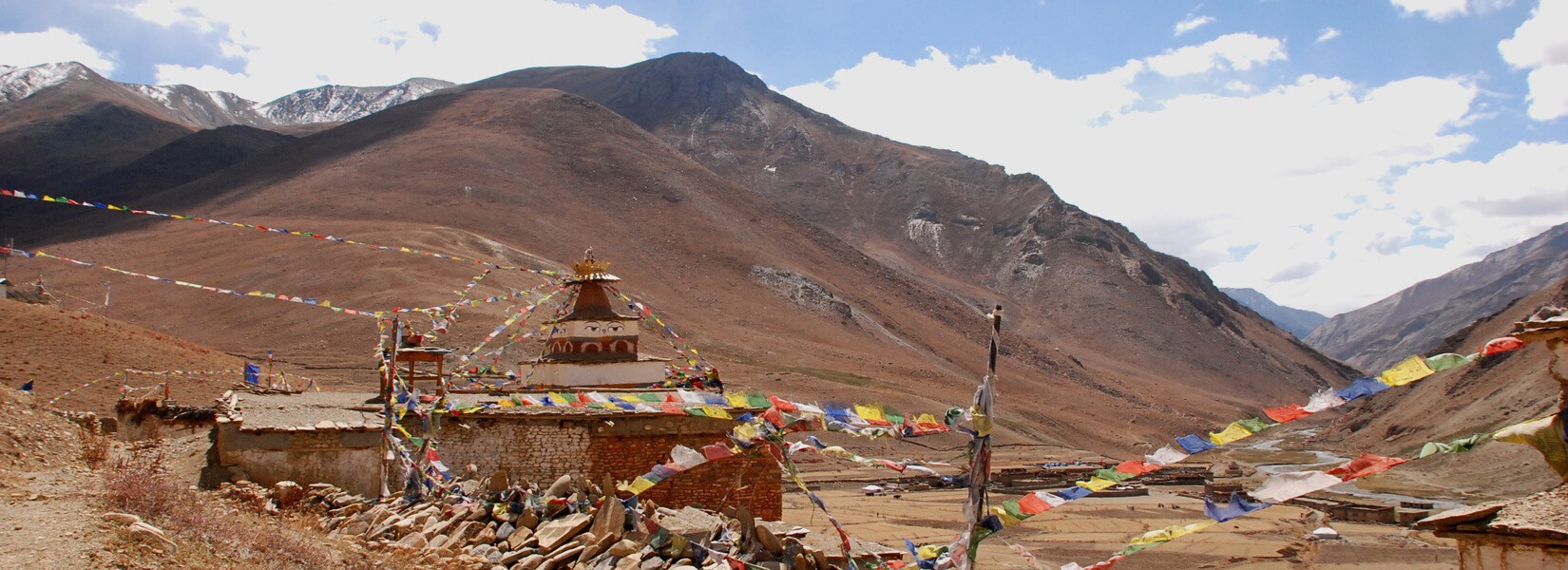
About Upper Dolpo Trek - 21 days
The Upper Dolpo Trek is widely regarded as one of Nepal’s most rewarding journeys into a truly remote Himalayan world. It is not a trek for shortcuts or quick highlights. This is a long, patient walk into a region that still feels separated from time itself. For travelers who value silence over crowds, culture over comfort, and landscapes that remain largely untouched, Upper Dolpo offers something increasingly rare in the modern Himalaya.
Set in Nepal’s far west, Upper Dolpo lies deep within a restricted region bordering Tibet. Reaching it requires commitment, careful logistics, and a willingness to move at the pace of the land. Over roughly 21 days, the trail winds through isolated valleys, high passes, and ancient settlements where roads have not yet reshaped daily life. Electricity is scarce, phone signals are almost nonexistent, and traditional systems of farming, trade, and belief continue much as they have for generations. Walking here feels less like visiting a destination and more like stepping into another rhythm of life.
From the very beginning, the sense of distance from the modern world is clear. As the trail climbs away from airstrips and market towns, infrastructure fades quickly. Villages are small and scattered, often built from stone and mud, blending seamlessly into the surrounding terrain. Fields of barley and buckwheat cling to the valley floors, irrigated by glacial streams that have sustained communities for centuries. Life is simple, but not easy, and the endurance of the people is deeply tied to the land they inhabit.
Cultural diversity is one of Upper Dolpo’s defining features. Even within Nepal, the region feels distinct. Local dialects are so unique that they can be difficult for Nepali speakers from other areas to understand. In the lower parts of the trek, Hindu communities dominate, practicing their faith in ways shaped by isolation and local tradition. Temples and shrines appear modest, yet they hold deep meaning for the villagers who depend on spiritual protection as much as physical resilience in such a demanding environment.
As you move higher into Upper Dolpo, the cultural landscape shifts dramatically. This is one of the last strongholds of the Bon Po religion, an ancient spiritual tradition that predates Tibetan Buddhism. Bon Po monasteries, prayer flags, and ritual sites are woven into everyday life. Ceremonies are not performances for visitors but living practices carried out for the well-being of the community and the balance of nature. The influence of Tibetan culture is unmistakable, from the architecture of homes to the clothing people wear and the rhythm of daily routines.
One of the most powerful aspects of trekking in Upper Dolpo is the quiet authenticity of these encounters. There is little sense of tourism here. Visitors are guests, not customers, and interactions feel genuine rather than transactional. Conversations are often simple, sometimes wordless, carried through gestures, shared tea, or a smile exchanged at the end of a long day. These moments, small as they seem, often leave a deeper impression than any dramatic viewpoint.
The landscapes of Upper Dolpo are as striking as its culture. The trek moves through a constantly changing environment, from narrow river gorges to vast open plateaus that feel almost lunar in their scale. Towering cliffs rise abruptly from valley floors, their layers of rock telling geological stories millions of years old. Beyond them, snow-covered peaks form a jagged horizon, marking the edge of the Trans-Himalaya. This is not the lush, forested Nepal many imagine, but a stark, high-altitude world shaped by wind, cold, and time.
Crossing high passes is one of the physical and emotional highlights of the journey. These crossings demand effort, patience, and respect for altitude, yet they reward trekkers with sweeping views that stretch endlessly in every direction. From these heights, human presence feels small, almost temporary, while the mountains stand immovable and eternal. It is in these moments that many travelers feel a profound sense of perspective, a reminder of how vast the natural world truly is.
Upper Dolpo is also home to remarkable natural features that add depth to the journey. High-altitude lakes reflect the surrounding peaks with mirror-like clarity, while ancient trade routes hint at the region’s role as a link between Nepal and Tibet. Caravan trails once used for salt trade are still visible, and in some areas, yaks continue to serve as the primary means of transport. These elements reinforce the sense that Upper Dolpo is not frozen in the past, but moving forward at its own pace.
Trekking here requires a camping-based approach, as lodges are rare or nonexistent in much of the region. This adds to the sense of self-sufficiency and immersion. Evenings are spent around camp, sharing meals under vast, star-filled skies, often in complete silence except for the wind or the distant sound of a river. These quiet hours are when many travelers reflect on the day, the terrain covered, and the stories encountered along the way.
With Himalayan Ecological Trekking, the Upper Dolpo Trek is approached with respect for both people and place. Years of experience in Nepal’s most remote regions ensure that the journey is thoughtfully planned, responsibly guided, and culturally sensitive. The focus is not just on reaching destinations, but on understanding the landscapes and communities encountered along the trail.
Upper Dolpo is not for everyone, and that is precisely what makes it special. It asks for time, effort, and openness, and in return offers depth, authenticity, and a rare glimpse into a Himalayan world that remains largely untouched. For those willing to walk its long paths, Upper Dolpo leaves more than memories. It leaves a lasting impression of resilience, simplicity, and the quiet power of living in balance with nature.