Each year, thousands of adventurers are drawn to Nepal's trekking routes, and having qualified guides and porters will make all the difference in having a safe and enjoyable experience. Qualified professional guides and porters from Nepal possess a wealth of local knowledge, cultural context, and logistical support that can greatly increase the quality of your trekking experience. This complete travel guide covers the Langtang Valley trek with Gosaikunda Lake, an outstanding alpine journey in Nepal that combines untouched Himalayan scenery, sacred high-altitude lakes, and a rich Tamang culture. Whether you're planning your first Himalayan trek or simply interested in a moderate-difficulty trek not far from Kathmandu, this Langtang Gosaikunda trek itinerary will offer you everything you need to plan for the best season, difficulty level, and route for this amazing trek.
Table of Contents
Why Combine the Langtang Valley Trek with Gosaikunda Lake
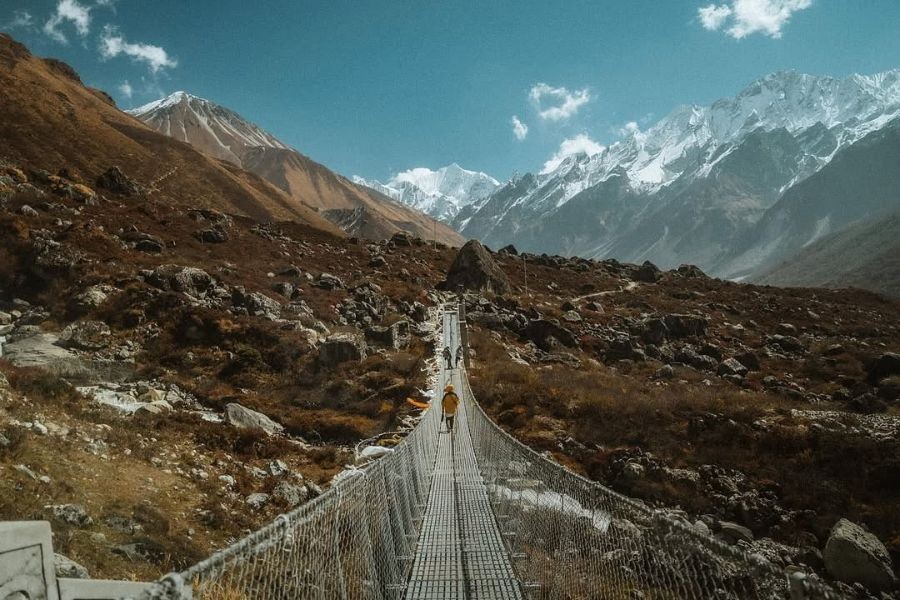
The combination of the Langtang Valley and Gosaikunda Lake is one of the most varied and rewarding trekking experiences in Nepal. The Langtang Valley trek with Gosaikunda provides trekkers the unique opportunity to explore two completely separate landscapes in one adventure: the lush and culturally rich Langtang Valley and the sacred alpine area surrounding the Gosaikunda Lake.
Dubbed the "valley of glaciers," Langtang Valley offers stunning mountain views of the majestic Langtang Lirung (7,227m), dense rhododendron forests, and traditional Tamang villages where trekkers can experience the true spirit of Himalayan hospitality. The valley suffered great damage during the earthquake of 2015, but has since been beautifully reconstructed. By trekking in this region, you will also be supporting the local community to recover from the earthquake.
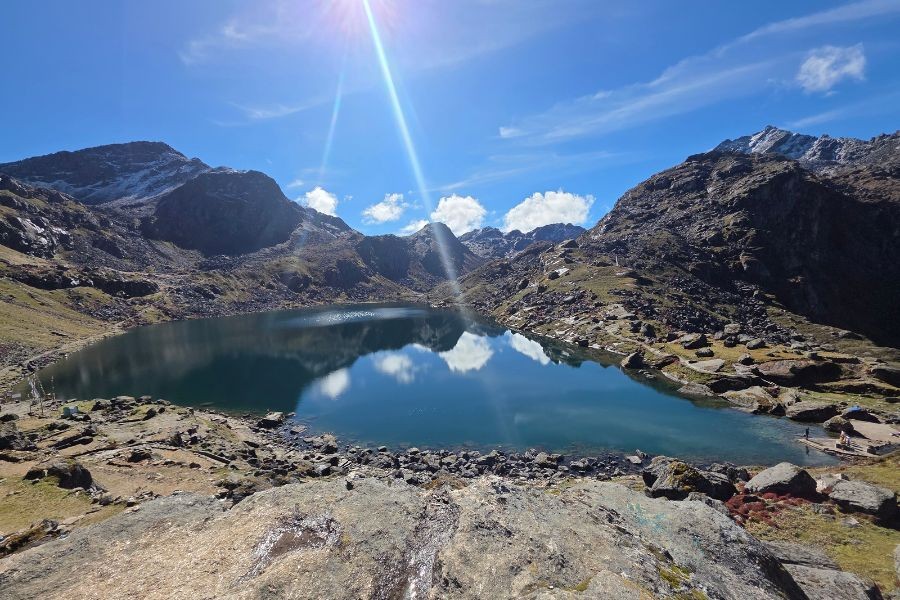
Including Gosaikunda Lake on your schedule adds the spiritual aspect to your trek. This sacred lake trek in Nepal takes you to a collection of alpine lakes at 4,380 meters, and is revered by Hindus and Buddhists. During the festival of Janai Purnima in August, these holy waters attract thousands of pilgrims, creating a unique cultural experience. The Gosaikunda Lake trek route is breathtaking, offering fantastic high mountain scenery, which can include views of Langtang Lirung, Ganesh Himal, Manaslu, and Annapurna on clear days.
This combined trek usually takes 10 to 14 days, and is a great value as it is easier to access and less busy than the very popular Everest Base Camp trek and Annapurna Circuit. The popular treks are iconic and have a huge draw; however, the Langtang Gosaikunda trek offers a more intimate Himalayan experience with stunning scenery.
The Langtang Gosaikunda Trek Ends in Dhunche
In conclusion, the Langtang Gosaikunda trek can be ended in Dhunche, the administrative center of the Rasuwa district, which is a nice option for every trekker. This is a popular choice for trekkers who either want a shorter itinerary or who have chosen to walk back through the Langtang Valley.
This trek begins with a beautiful drive from Kathmandu to Syabrubesi (approximately 7-8 hours), where your first trek is to begin. You'll ascend through Lama Hotel, Langtang village, and Kyanjin Gompa (3870m), the highest settlement in the valley. Most trekkers spend an acclimatization day at Kyanjin, taking time to walk and explore nearby viewpoints such as the Kyanjin Ri (4773m) or Tserko Ri (4984m) for a stunning view of the Himalayas.
From Kyanjin Gompa, you will backtrack to Lama Hotel, and instead of returning to Syabrubesi, you will begin to make the turn to Thulo Syabru and start to climb toward Gosaikunda. Starting to climb from Sing Gompa (Chandanbari) as well as Laurebina, and to the holy Gosaikunda lakes. Once you have seen the lakes, you will descend toward Dhunche and return to Kathmandu.
Usually, the trek will take 9 to 11 days and follows the Gosaikunda Lake trek route in a more circular manner, which is helpful if you have a much shorter timeframe for the trek. The descent to Dhunche is relatively easy-going; traditional villages are left behind before proceeding downhill, and the view of the mountains remains pleasant throughout.
- Article you may like: Accommodation on Langtang Valley Trek | Teahouses, Lodges & Homestays
The Langtang Gosaikunda Trek Ends in Chisopani, Sundarijal
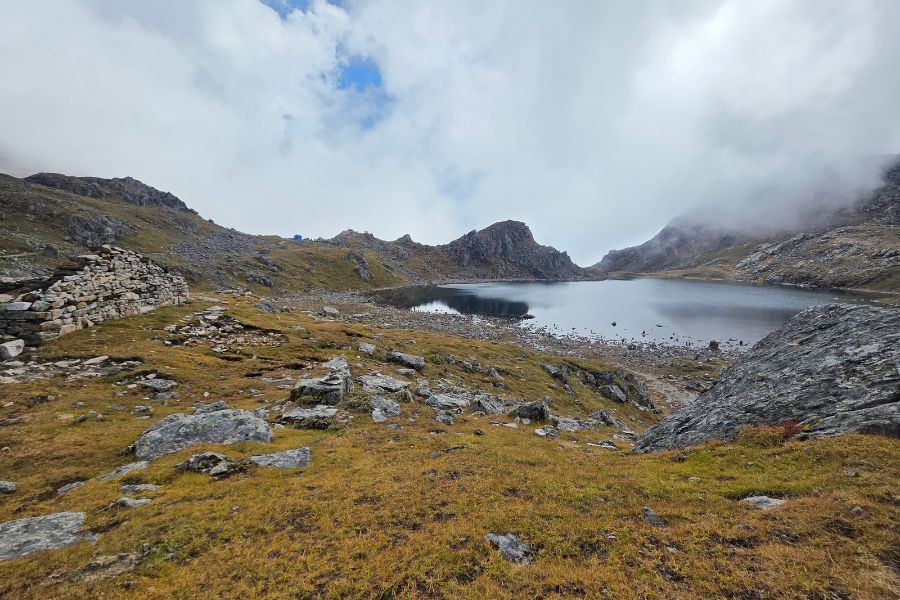
For trekkers who want to have a complete experience, adding Gosaikunda Lake to the Langtang Valley trek and finishing at Chisopani and Sundarijal is a nice alternative. This longer trek has a greater variety of scenery and culture.
Instead of continuing down to Dhunche after Gosaikunda Lake, you will cross the difficult Laurebina Pass (4,610m), which requires good fitness and acclimatization to the altitude. Then the trail descends through Phedi down to Kutumsang, a nice village with superb views of the mountains.
The next day of the trek continues on beautiful trails through forests and terraced farmland, passing through Chisopani (2,165m), a well-known viewpoint for the sunrise across the Himalayan ranges. The last day is a nice, mostly downhill stroll through Shivapuri National Park to Sundarijal, where you will catch transportation to return to Kathmandu.
This longer walk usually takes 12-14 days, and is suitable for trekkers who wish to see more of Nepal's varied environments, from high alpine topography to tropical lowland forests. In certain sections of the trek, you will be walking in the same region as the Gosaikunda Helambu trek, another stunning trek in the Langtang region. Similar to the classic Manaslu trek, for example, or the remote Upper Mustang trek, this alternative, longer trek will offer a deeper experience of the Himalayas, including a variety of landscapes and cultural experiences.
The Best Season to Trek in Langtang Valley with Gosaikunda
Picking the ideal time will profoundly influence your trekking experience on the Langtang Gosaikunda trek. The most worthwhile seasons to trek in the Langtang Valley with Gosaikunda ultimately depend on how you prioritize the weather, your experience with other trekkers, and the scenery.
Spring (March to May) is generally one of the most popular times for this trek. During this time, the weather is usually dry, and the temperatures are intermediate, making for comfortable trekking. The rhododendron forests bloom spectacularly, and the hillsides will be colored in vibrant shades of red, pink, and white. Visibility is excellent with crystal clear views of the mountains. The downside to this trek is that spring is the busiest season, and the teahouses will be packed with trekkers, especially in April.
Autumn (September to November) is the other peak season, and it can be said to be the most popular time to trek in the Himalayan range. After a monsoon, the skies are generally very clear, which permits good views of the mountains. When at the lower elevations, the temperatures are comfortable, but it can be quite cold in the higher elevations, especially at Gosaikunda Lake. It is also a culturally rich time to trek, for during the harvest season in the fall, local festivals and agricultural activities are prevalent. Not unlike spring, the popularity of trekking routes like the Annapurna Base Camp trek or Ghorepani Poon Hill trek, there are still many trekkers on the trails in the autumn season.
While winter (December to February) is a possibility, it can make the trip difficult. Heavy snow can block higher passes, particularly around Gosaikunda and Laurebina Pass, and temperatures drop significantly, particularly at night, so quality cold-weather gear is essential to bring with you. Many of the teahouses at higher elevations will close for the winter months. However, if the weather allows, winter brings peace and seclusion, beautiful snow-covered landscapes, and the opportunity to see great views of the mountains.
The monsoon season (June to August) is generally not recommended for trekking in Langtang Valley with Gosaikunda. Heavy rains will make the trails slippery and potentially treacherous, leeches will populate lower elevations, and the mountains will be obscured by cloud. However, in August, the Janai Purnima festival takes place, which attracts many Hindu pilgrims to Gosaikunda, and that in itself can be a valuable experience if you don't mind trekking in challenging conditions.
Mostly, the best trekking weather, visibility, and conditions for this sacred lake trekking trip will be in the spring or autumn.
- Related article: Best Time to Trek Langtang Valley: A Complete Seasonal Guide
How Difficult is the Langtang Gosaikunda Trek?
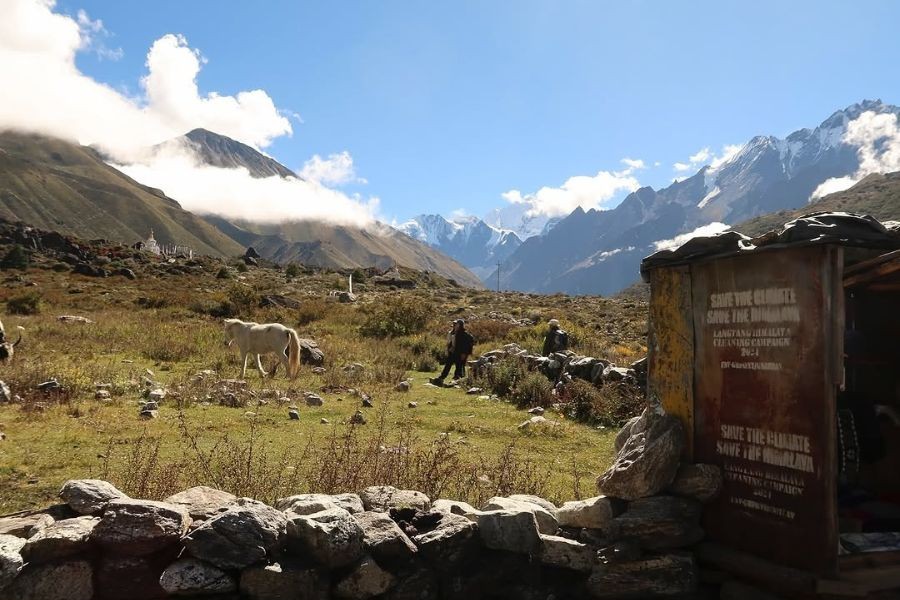
It is vital to recognize the Langtang Gosaikunda trek difficulty to prepare correctly and ultimately enjoy an enjoyable experience. The trek is generally rated as moderately difficult and is suitable for a reasonably fit trekker with some hiking experience.
One significant factor in the difficulty of this trek is altitude. The trek has an elevation gain to a maximum of 4,380 meters to Gosaikunda Lake, and if you cross Laurebina Pass, the elevation at the pass is 4,610 meters. While this is considerably lower than the elevation of Everest Base Camp (5,364m) or Thorong La Pass (5,416m) on the Annapurna Circuit, altitude sickness may still occur. Therefore, proper acclimatization, gradual ascent, and staying hydrated are very important.
Daily walking time is generally scheduled for around 5-7 hours of walking time, with some longer days, depending on your itinerary. The terrain can change from relatively easy walking through the valley to rather steep hiking when ascending to Kyanjin Gompa and Gosaikunda. The stone steps and the rocky trails located around Gosaikunda can be physically challenging, especially at the higher altitudes where the air is thinner.
You will not need technical skills—this is a teahouse trek, with a well-marked trail, and no climbing. However, you must be fit. Previous trekking experience and knowledge of the trekking environment are a plus, but first-time trekkers who have decent training can complete this trek.
Weather conditions affect your experience depending on the time of year and the emphasis on weather. Your clothing and equipment will need to support colder temperatures at higher altitudes, especially when you get to Gosaikunda. If you are trekking around the shoulder seasons and winter, snow and ice might significantly raise the difficulty level.
The Gosaikund Lake trek route is physically easier than other treks in Nepal, such as the Three Passes trek in the Everest region, or the Manaslu Circuit, which are both physically demanding, but physically more demanding than shorter treks (e.g., Poon Hill, Kathmandu valley rim). The Gosaikunda Lake trek can be a great stepping stone for trekkers considering taking on more challenging treks in the future, such as parts of the Great Himalayan Trail.
- Related article: Langtang Valley Trek Difficulty - A Complete Guide for Beginners to Experienced Trekkers
Preparation tips for managing the difficulty include:
- Building cardiovascular fitness through regular hiking, running, or cycling for 2-3 months before your trek
- Practicing hiking with a daypack on varied terrain
- Planning rest days for acclimatization, particularly at Kyanjin Gompa
- Hiring an experienced guide who understands altitude-related risks and local conditions
- Packing appropriate gear, including warm layers, quality trekking boots, and trekking poles
- Maintaining a steady, sustainable pace throughout the trek rather than rushing
With proper preparation and realistic expectations, most trekkers find the Langtang Gosaikunda trek challenging but achievable and immensely rewarding.
FAQs
How long does the Langtang Valley trek with Gosaikunda Lake take?
This trek can take anywhere between 10 - 14 days, depending on the route, the pace, and whether you decide to take rest days along the way for acclimatization and exploring.
Am I required to have a guide for the Langtang Gosaikunda trek?
Although a guide is not legally required, it is highly advisable to have an experienced guide for safety, navigation, and cultural experiences, as well as support when experiencing altitude sickness or in the event of an emergency.
What permits do I need for the trek?
You will need a Langtang National Park entry permit as well as a TIMS (trekker's information management system) card. Usually, your trekking agency will handle the permits for you.
Is the Gosaikunda Lake trek suitable for beginners?
With the proper training, those who are in reasonably good shape can finish this trek. That said, it is helpful to have some trekking experience at altitude, as it is a moderate walk.
What type of accommodation will there be on the Langtang Gosaikunda trek?
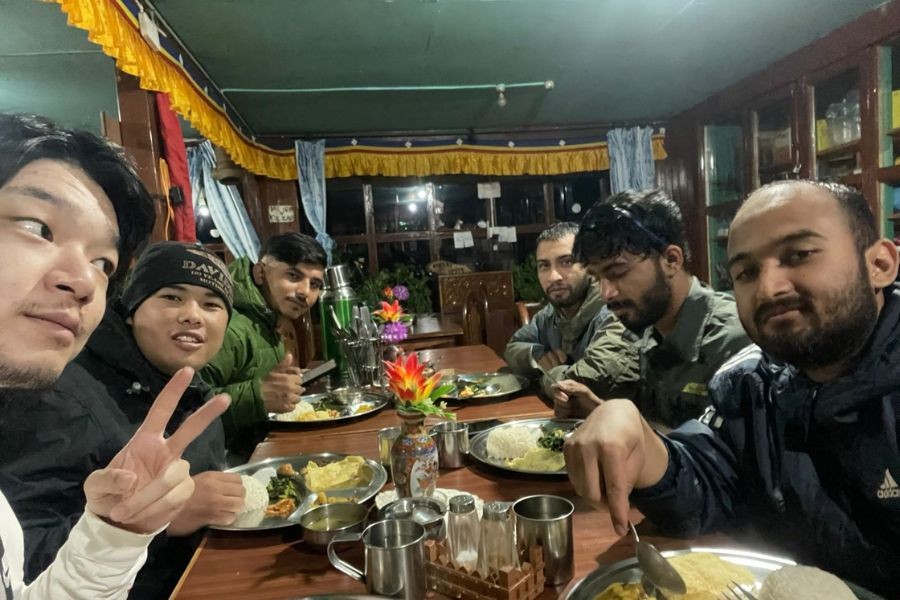
Accommodation will be in local teahouses that offer twin-sharing rooms that are basic but comfortable. Each teahouse has a communal dining area, and rooms become more basic at greater elevations.
Can I trek to Gosaikunda in the winter?
Yes, winter trekking is possible, but it can be challenging due to conditions like heavy snow, freezing temperatures, and limited teahouses or shelters. Proper gear and flexibility in the itinerary are needed.
How does the Langtang Gosaikunda trek compare to the Everest Base Camp?
This trek is shorter, not as crowded, much closer to Kathmandu, and has a lower maximum altitude than Everest Base Camp. It is shorter and offers great value and scenery in a shorter time.
Conclusion
The trek to Langtang Valley and Gosaikunda Lake stands as one of Nepal's most fulfilling trekking opportunities, combining natural beauty, cultural aspects, and spiritual significance. From the rebuilt villages of Langtang Valley to the holy waters of Gosaikunda, this trek reflects the resilience and beauty of the Himalayan region. Regardless of whether you take the short, Dhunche route or the longer Sundarijal option, you will experience a varied landscape, rich hospitality, and beautiful views of the mountains, comparable to any of the famous trails of Nepal. The best season to trek to Langtang Valley and Gosaikunda Lake is spring and autumn, with the Langtang Gosaikunda trek rated as a moderate adventure, ready for trekkers looking for an authentic trek in the Himalayas. The aspect of sacred lakes trekking in Nepal is a spiritual element that deepens the experience and makes it an unforgettable journey.
Are you ready to create this amazing experience?
Please contact Himalayan Ecological Trekking today to plan your trek to Langtang Valley and Gosaikunda Lake with knowledgeable guides and overall assistance.
Inquire Now: [email protected]
Expert Consultation: WhatsApp: +977 9851006023 (Bikesh)